Key takeaways:
-
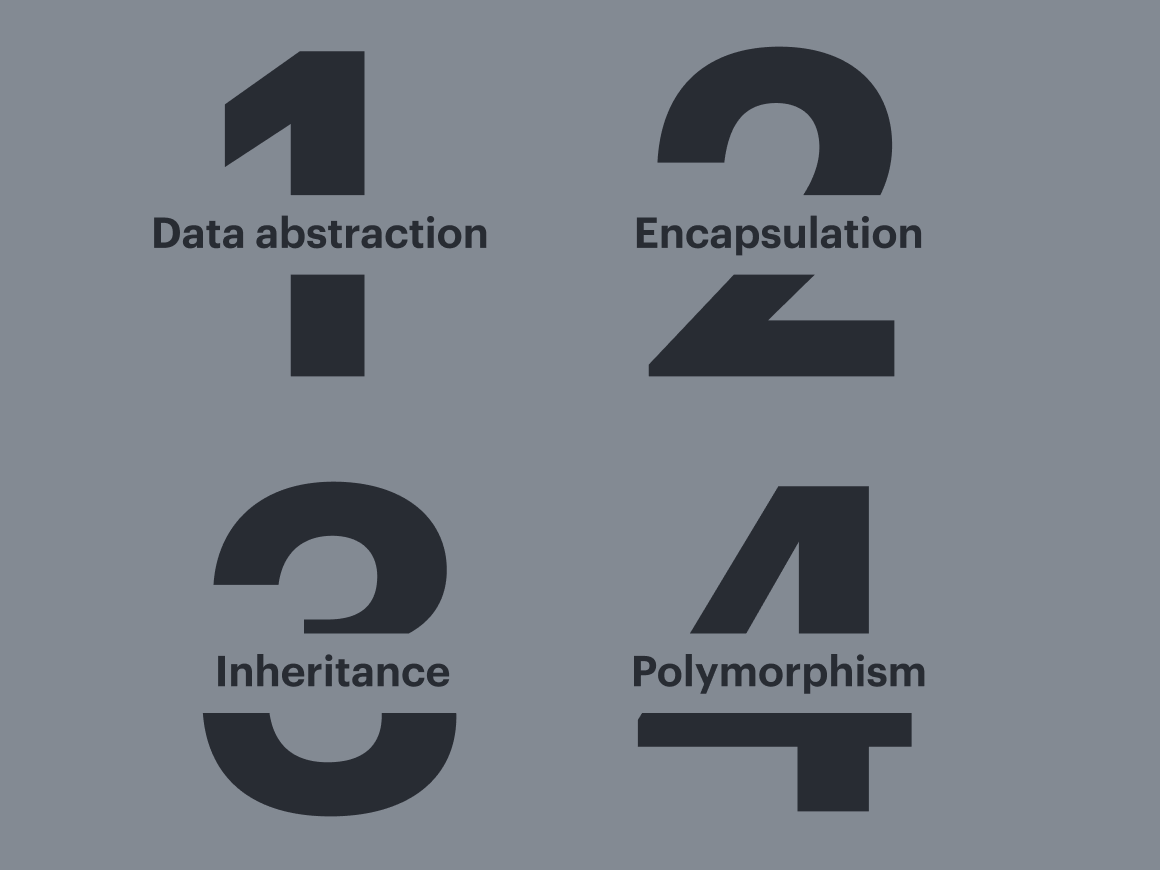
Object-oriented programming (OOP) has four guiding pillars: data abstraction, encapsulation, inheritance, and polymorphism.
-
The OOP model focuses on self-contained objects, representing real-world entities, making it easier to visualize and manage complex systems.
-
OOP is a fundamental framework for modern software. It is used in building mobile apps, video games, manufacturing systems, office automation systems, and more.
What is object-oriented programming (OOP)?
Object-oriented programming (OOP) is a computer programming model that organizes software design around data (objects) rather than focusing on functions and logic. The main idea of OOP is to implement real-world entities within code, allowing concepts like inheritance and polymorphism.
The primary goal of OOP is to fuse the data and the functions that operate on them, preventing other parts of the code from directly accessing this data.
This type of programming creates a paradigm that reflects the world's structures and systems, which helps it depict complex systems.
What constitutes an object?
Objects are a fundamental part of OOP. An object is a data field with unique attributes and behaviors. Objects can represent real-world entities or processes, like a customer or a shopping cart in an e-commerce system.
This article will explain why OOP is important, its advantages and disadvantages, and common OOP languages.
Why is OOP important, and when is it used?
Object-oriented programming is a fundamental model for building large, complex, and actively updated or maintained software. By dividing complexities into smaller groups, engineers can collaborate on parts of a system simultaneously. It is scalable and efficient, making maintaining projects more effortless after launch.
OOP is used for:
-
Manufacturing
-
Design programs
-
Office automation systems
-
Video games
-
Simulation and modeling
-
Mobile applications
Pillars and key principles of object-oriented programming
There are four pillars of OOP: data abstraction, encapsulation, inheritance, and polymorphism.

Data abstraction
Data abstraction is an essential part of object-oriented programming. It provides only the essential information to the outside world while hiding background details or implementation. This helps simplify the object and its task.
Example: A driver knows pressing the accelerator increases speed, but doesn't need to know the car's internal engine mechanisms. Including only critical data necessary for the object to perform a task will make it easier to make future changes and additions.
Encapsulation
Encapsulation explains the wrapping of data under a single unit. It is the mechanism that binds code and the data it manipulates.
The variables or data of a class are hidden from other classes and can only be accessed through member functions of their own class. This is also known as data-hiding.
It provides enhanced security and helps prevent unintended data corruption.
Example: A finance executive needs sales data for a report. They have to contact someone in the sales organization to access that information from their customer relationship management system (CRM) rather than directly accessing it themselves.
Inheritance
This pillar refers to a class's capability to derive properties and characteristics from another class. Inheritance enables code reuse, as properties and functions can be inherited rather than written repeatedly, reducing redundancy and saving time.
Example: An employee might inherit variables and characteristics from a general person.
Polymorphism
Polymorphism means "to have many forms." It explains that the same object can have multiple functions depending on the context.
Polymorphism allows a single method call to produce a different result depending on the object it's acting on. It allows a function to work with a specific interface, uniformly manipulating entities of different classes.
Example: A single person can simultaneously be a father, husband, and employee, exhibiting different behaviors in different contexts. If you have circle and square objects, they could fall into a shape class, with a draw method that can be called for both.
Other key principles of OOP include: class, object, dynamic binding, and message passing.
Object
An object is the basic unit of object-oriented programming. It represents real-life or abstract entities and is an instance of a class. Memory can be allocated only when an object is created.
Objects interact by sending and receiving messages, needing to know only the type of message accepted and the response returned, not each other’s internal details.
Example: A dog is a real-life object with characteristics like color and breed, and behaviors like barking, sleeping, and eating.
Class
Similar to inheritance, objects are categorized into classes. A class serves as a blueprint for individual objects, defining a set of properties or methods common to all objects of that type. Consists of data members (variables and attributes) and member functions (methods).
Example: A car class might define properties like four wheels, speed limit, and range.
Dynamic binding
Dynamic binding is the mechanism by which the code to be executed for a function call is determined at run time. This means the exact code associated with a procedure call is not known until the time of the call.
Dynamic binding often works with inheritance and polymorphism, allowing an object to search its parent class hierarchy to find and execute the correct version of that method. This flexibility enables an object to take on different behaviors at run time.
Example: Vehicle is your base class, and from that, you have two derived classes, car and motorcycle. Both have shared characteristics, like starting an engine to operate, but the way they perform that action is unique.
Message passing
Message passing is used in OOP, where objects interact by sending and receiving information to each other. It involves specifying the object's name, the function's name, and the information to be sent.
Example: A driver would be an object that interacts with another object, a vehicle.
Advantages of OOP
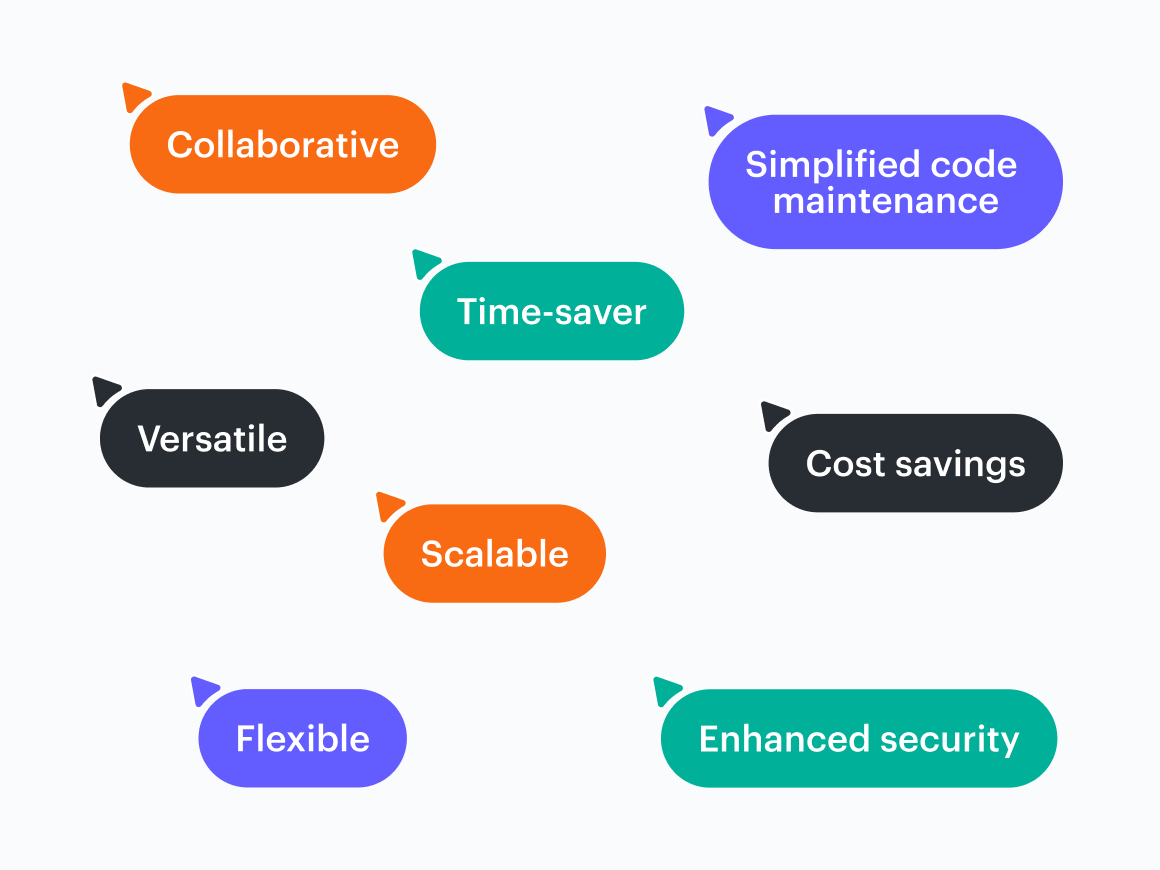
Collaborative: Encapsulation allows objects to be self-contained, simplifying troubleshooting and facilitating collaborative work.
Time-saving: Inheritance allows developers to reuse existing code, saving time from tedious work.
Versatile: OOP enables writing generic code that can work with a wide range of data, avoiding the need to write basic functionality repeatedly.
Scalable: System functionalities can be implemented and extended independently.
Enhanced security: Encapsulation and abstraction protect complex code, data, and internet protocols.
Flexible: Polymorphism allows a single function to adapt its behavior based on the class it is applied to and enables different objects to be used through a common interface.
Simplified code maintenance: Specific parts of a system can be updated and maintained without requiring significant adjustments to the entire codebase.
Cost savings: Benefits like improved maintenance and code reusability contribute to reduced overall development expenses.
Criticisms of OOP

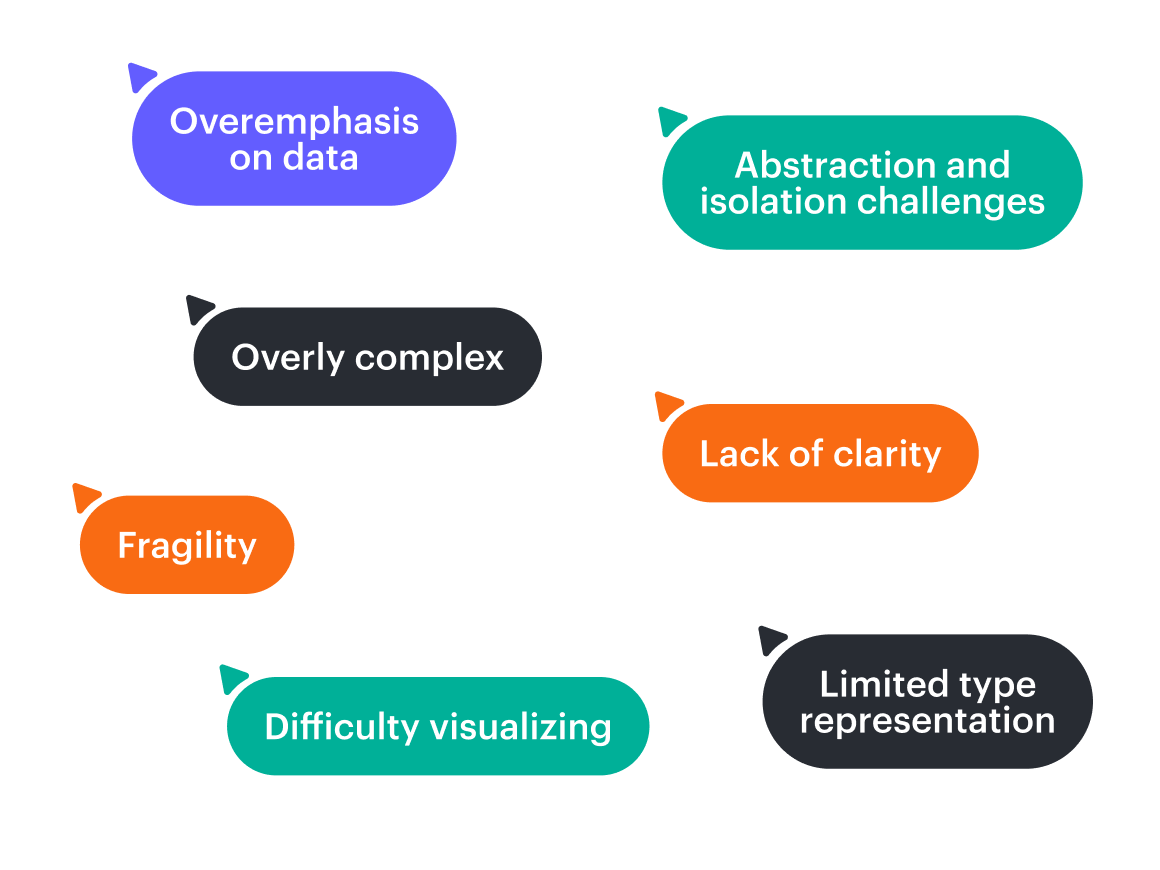
Overemphasis on data: Some critics argue that OOP places too much focus on the data component of software development, neglecting computation or algorithms.
Complexity: OOP code can sometimes be more complicated to write initially and may require longer compilation times compared to other programming paradigms.
Fragility: Pertaining to inheritance, there may be the potential for fragile base classes.
Difficulty visualizing: OOP was primarily designed for code reuse and maintenance, not for explicitly visualizing programs. This can become a challenge in modern computing with parallel processing and multiple threads.
Abstraction and isolation challenges: Objects might appear clearer when isolated, but their behavior can become more difficult to understand when operating within the larger program's context.
Limited type representation: Alexander Stepanov criticized OOP for being technically unsound in that it attempts to fit everything into a single type, whereas sometimes, interfaces spanning multiple types are more appropriate for generic programming.
Lack of clarity: The exact set of features that define OOP is debated, making it challenging to classify languages strictly as OOP or to compare it definitively with other programming styles.
Popular OOP languages

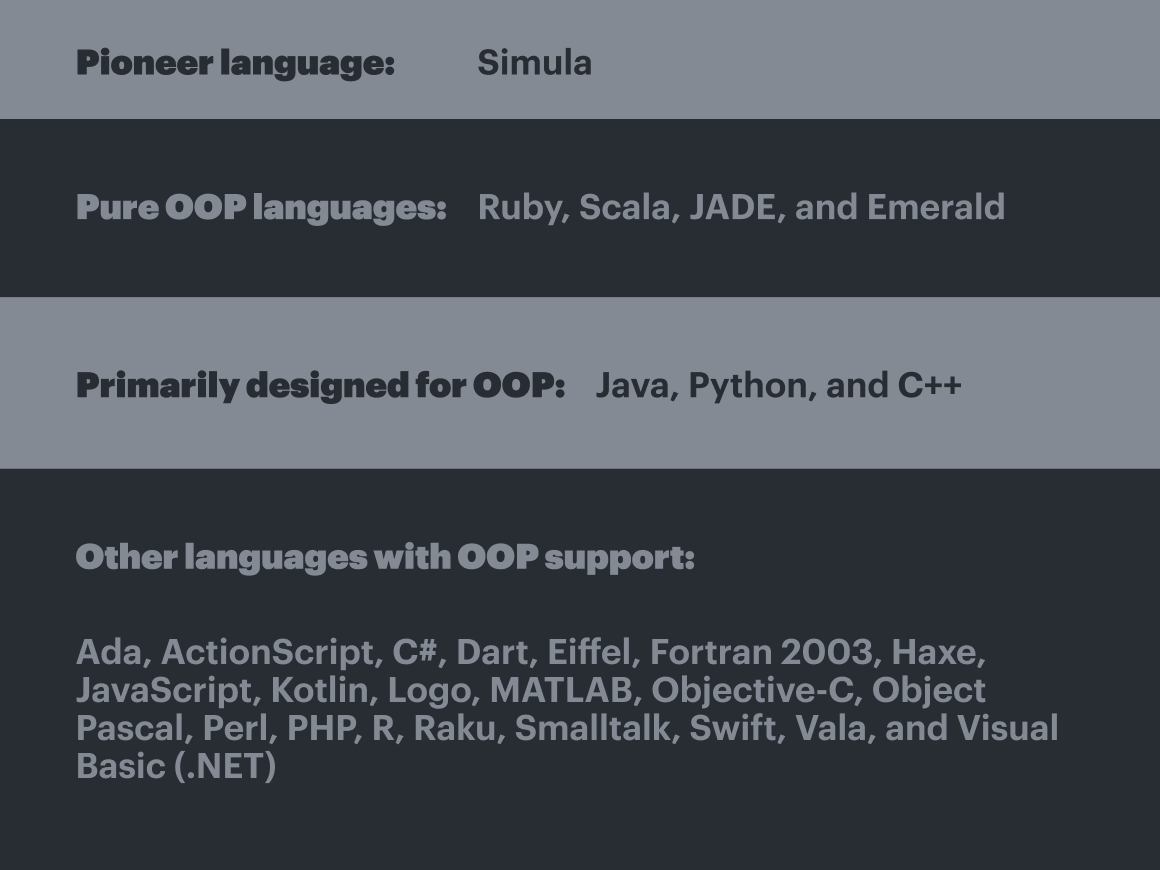
Pioneer language: Simula, developed between 1961 and 1967, is widely credited as the first language with primary object-oriented features.
Pure OOP languages: Languages that treat everything as objects, such as Ruby, Scala, JADE, and Emerald.
Primarily designed for OOP: Languages like Java, Python, and C++ are designed with OOP in mind.
Other languages with OOP support: Many languages have been augmented with OOP features or provide strong support, including Ada, ActionScript, C#, Dart, Eiffel, Fortran 2003, Haxe, JavaScript, Kotlin, Logo, MATLAB, Objective-C, Object Pascal, Perl, PHP, R, Raku, Smalltalk, Swift, Vala, and Visual Basic (.NET).
It's important to note that many advanced programming languages allow developers to combine different programming models. For example, JavaScript and Scala can be used for both OOP and functional programming.
Object-oriented programming is a great framework to use if you want to emulate real-world examples. However, they can be complex, so it is important to use software that will allow you to clearly and effectively diagram the system while facilitating iterative collaboration.

Efficiently visualizing your systems is easy with Lucid. Explore tips for clear and effective diagramming.
Read nowAbout Lucidchart
Lucidchart, a cloud-based intelligent diagramming application, is a core component of Lucid Software's Visual Collaboration Suite. This intuitive, cloud-based solution empowers teams to collaborate in real-time to build flowcharts, mockups, UML diagrams, customer journey maps, and more. Lucidchart propels teams forward to build the future faster. Lucid is proud to serve top businesses around the world, including customers such as Google, GE, and NBC Universal, and 99% of the Fortune 500. Lucid partners with industry leaders, including Google, Atlassian, and Microsoft. Since its founding, Lucid has received numerous awards for its products, business, and workplace culture. For more information, visit lucidchart.com.
Related articles
Introduction to class diagrams
This article will give an introduction to class diagrams, how to create them, along with some useful tips.
How to reduce IT complexity during digital transformation
In this article, we discuss the IT complexity and challenges you might face as you implement your digital transformation initiative.
Create diagrams faster using automation features in Lucidchart
Working visually shouldn’t mean more work for you. Find out how to automate your diagramming with Lucidchart to help your teams do more faster.
Build smarter Lucidchart diagrams [+ free course!]
In this post, we’ll go over some of best tips to build smarter diagrams. Includes a free course to become an expert!