Businesses are usually categorized as either B2B or B2C. But things aren’t always that simple, especially in a complex, competitive economy. Another option is B2B2C.
B2B2C stands for business to business to consumer, and this model offers an alternative path with its own challenges but also unique benefits—if you are judicious in who you partner with and what work and profits you share with them.
Keep reading to learn more about what B2B2C is, including B2B2C examples, how it’s different from B2B, and what advantages and disadvantages it has—and how Lucidchart can help you determine whether it’s the right model for your company.
What is B2B2C?
When you’re talking about business models, B2C means business to consumer, or when a business sells their product or service directly to consumers. B2B means business to business, or when a business sells to other businesses.
B2B2C is a bit more complex: It’s business to business to consumer. In this case, two businesses partner to sell a product or service to consumers. For example, a restaurant may partner with a food delivery service, which offers the restaurant a new customer base (people who want to eat at home), and then the delivery service a cut of the profits.
What is the difference between B2B and B2B2C?
The B2B model doesn’t involve consumers at all, only organizations. For example, a company makes hair dye sells to salons. The salons then use that hair dye for their customers, but the manufacturing company doesn’t have any direct involvement with them—their business model focuses strictly on the business itself.
On the other hand, B2B2C means that two companies partner to sell to consumers. They both have a relationship with the consumer and benefit from the collaboration.
What are some B2B2C examples?
Want some B2B2C examples to help you get a better idea of how the model works? Here’s three:
-
The Apple and Google app stores: Developers create apps, but they use the app stores to help customers find them. Apple and Google get a cut of the profits from the apps, and the developers have a bigger audience for their work.
-
OpenTable: Restaurants partner with OpenTable, allowing diners to find them and make reservations more easily.
-
Amazon: Businesses work with Amazon because the platform expands their reach and helps customers find them. They make more sales, and Amazon gets a cut of the profits.
What are the benefits and drawbacks of the B2B2C business model?
The B2B2C business model is popular for a reason. Companies can gain a lot through smart partnerships, including the following benefits:
-
More customers: When businesses team up, they can help each other find new customers. For example, manufacturers partner with Amazon because they know that people looking for their products can find them there. On their own, they might struggle to acquire new customers. This can also help new businesses grow more quickly.
-
Focus on their own products: By partnering with another business to handle things like sales, fulfillment, or marketing, a manufacturer frees up their own time and resources. In the end, they can spend more time and money perfecting their offering instead of figuring out how to get it out to customers.
-
Customer convenience: If a customer already has an OpenTable account, for example, they can easily make a reservation at a restaurant. Many such B2B2C partnerships smooth customers’ purchasing path, making it a better experience for them—which increases the likelihood that they’ll keep coming back.
-
Brand credibility: If a business is relatively new or unknown, they have a lot to gain by partnering with someone that consumers trust. Then they gain trust by extension.
When used judiciously, the B2B2C model offers businesses a way to gain more customers and make more sales—and both companies win.
However, B2B2C isn’t without its downsides. The most obvious is that if you’re working together to sell to customers, then you have to split the profits. If your business already has a narrow profit margin, then even the increased sales from the partnership may not be enough to keep you in the black.
The other downside is the same one you expect any time you cooperate with someone else: What you gain from them, you lose in control. Simply put, if you work with someone else, you have to accept the possibility that they could mess things up for you.
For example, if a customer makes a reservation through OpenTable, but the restaurant is running behind and the customer has to wait a long time to be seated despite the reservation, they may feel frustrated. Even if this is solely the restaurant’s fault, the customer’s feelings might transfer to OpenTable too, making them less likely to use it again.
While it isn’t always fair, a business partner’s actions (and mistakes) can reflect on your company, and you could lose business as a result. Consequently, companies considering the B2B2C business model should be judicious in choosing who to partner with. You must be able to trust that they’ll follow through on their commitments.
Should you try B2B2C?
If your business is thinking about taking the leap to team up with someone else, you have a lot to consider. You’ll need to plan carefully for how you can reap the benefits of the arrangement while minimizing the downsides.
Lucidchart has templates for organizing your thoughts to help you figure out your best move. Here are a couple to get started:
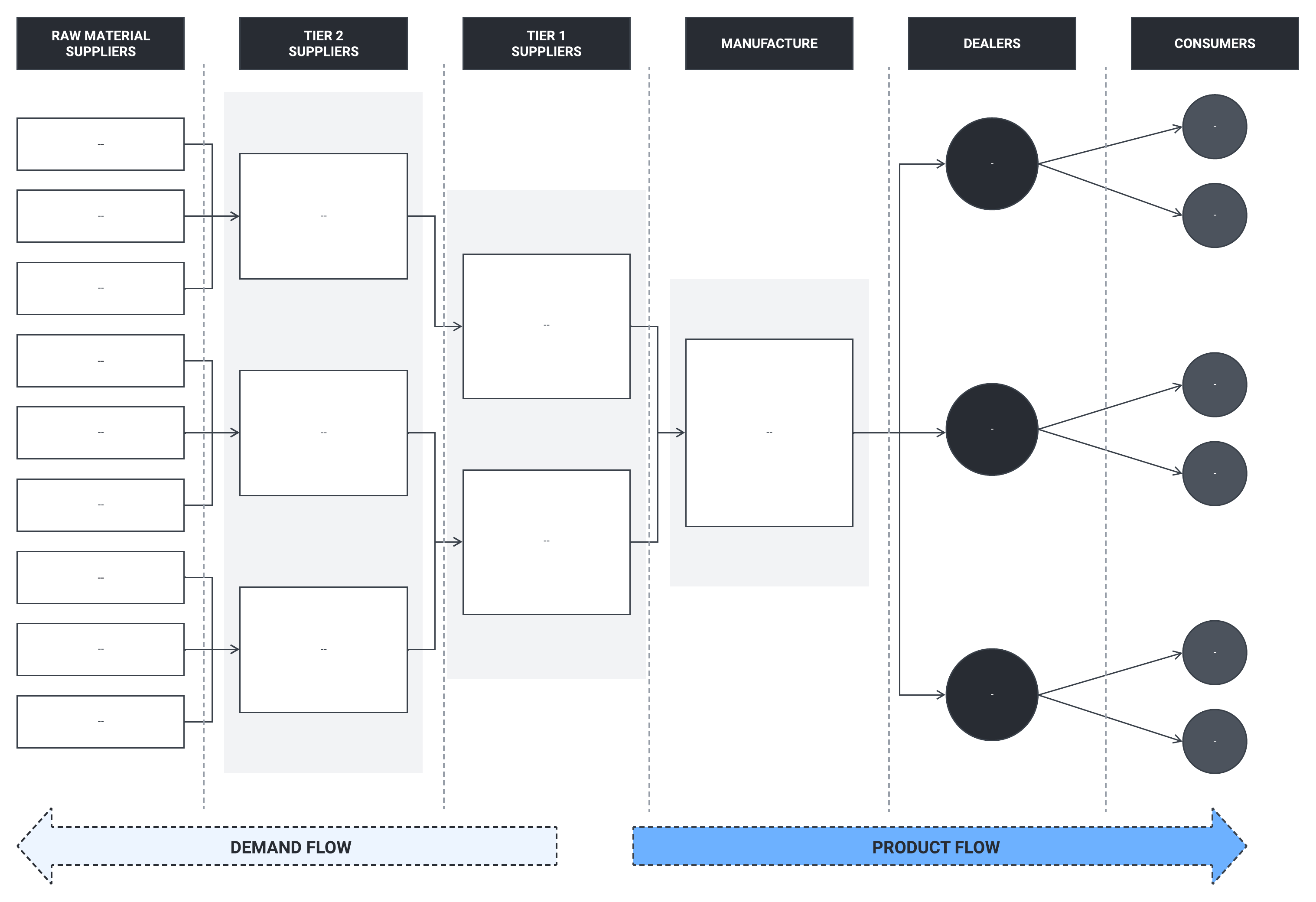
1. Supply chain template