For many people, email and instant messaging systems like Slack are the main way of communicating at work. But have you ever gotten a memo? Chances are, you’ve received a memo in a business setting—or, at some point, you might be asked to write one.
Crafting an effective memo is a valuable skill and an important aspect to internal communications. In this blog post, you’ll learn all about what a memo is, when to send one, and how to write a memo so you can convey information quickly and effectively.
What is a memo and what is its purpose?
A memo, which is short for “memorandum,” is a message about a specific problem and proposes solutions or action steps. Memos are helpful for communicating important information in a professional setting, such as updates to policies or procedures.
Typically, a memo is intended for a large audience, such as an entire organization. Recipients should be quickly informed and easily understand the proposed plan of action, so memos need to be straightforward, brief, and easy to read.
Although memos aren’t as common anymore, they still can be very useful. It’s helpful to know when it’s better to send a memo rather than an email or other type of message at work.
Why send a memo?
The purpose of sending a memo is to inform and persuade your audience with a specific call to action. Your memo should provide information, highlight a specific problem, and include a solution. Keep in mind that memos are meant for internal communication to a large group.
You can send a memo when you need to:
-
Let an entire organization know about internal changes
-
Update safety guidelines or other policies and procedures
-
Provide information about an upcoming event
-
Share project updates that impact multiple teams
-
Disseminate important news
Unlike press releases, letters, or emails, memos are addressed to more than one person and aren’t intended to be shared with anyone outside of the organization. Memos should be very brief and kept to the point with a formal heading and closing statement.
Different types of memos
There are many different kinds of memos depending on your audience and the specific purpose of the message.
The general types of memos are:
-
Informational memos, which are often used to communicate updates such as announcements or new policies. These memos don’t require a response.
-
Request memos, which ask for action or assistance.
-
Confirmation memos, also known as response memos, that acknowledge the request.
-
Directive/instructional memos, which provide specific instructions that employees can follow step-by-step for a certain task or procedure.
There are also specialized kinds of memos, such as field reports. Essentially, you can use a memo for any formal internal communication.
Memorandum in law
A memorandum in law is different from memos used for everyday business. While you might not come across legal memorandums often, it’s useful to be aware of them and understand that a legal memorandum formally analyzes and advises a client on a specific legal issue.
For legal memorandums, there is a difference between a memorandum of understanding (MOU) and a memorandum of agreement (MOA).
A MOU is a non-binding agreement that is not a formal contract between two parties. MOUs are often preliminary to future agreements and provide a framework for mutual understanding or negotiations. A MOA, however, is legally binding and enforceable under law. Each party has to legally fulfill their obligations as outlined in an MOA.
How to write an appealing and efficient memo in a few steps
While there are different kinds of memos, they all follow the same basic format. Remember to keep your words concise and consider the professional setting.
Here’s how to write a memo:
-
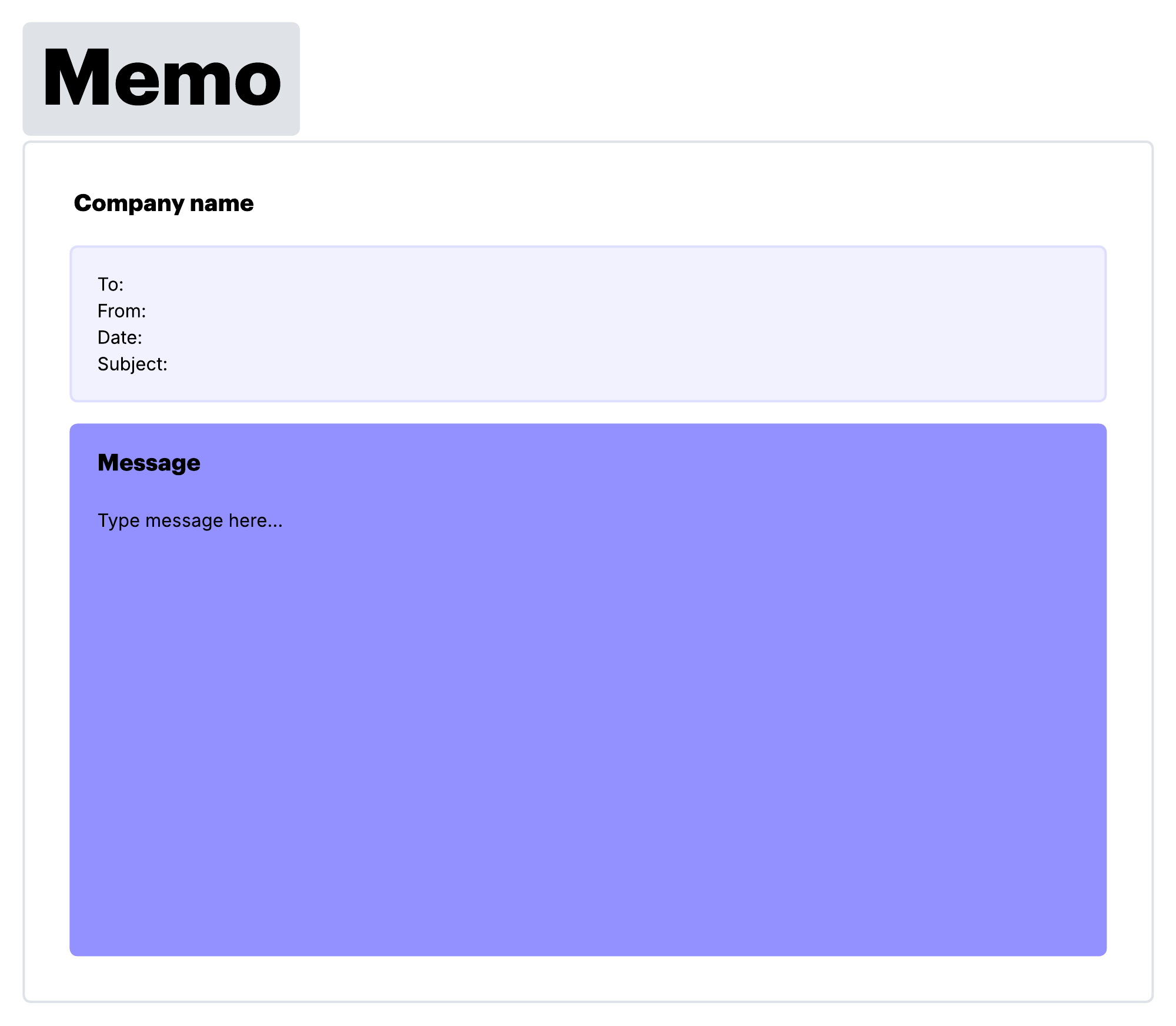
Add a heading. Every memo should begin with a formal heading that includes who the memo is addressed to, who it's from, the date, and the subject.
-
Craft an opening statement. This statement is your introduction in the memo, stating your purpose, clearly identifying the issue, and outlining your proposed solution or call to action. Your readers should clearly understand what the rest of the memo will cover.
-
Add some context. In the next section, provide more information about the issue. Try to keep it to the most relevant information and emphasize the main point.
-
Have a clear call to action. Clearly detail the steps that people should take to resolve the issue. If your memo is announcing an event, this is the section where you’ll highlight what people need to do for the event.
-
Include a discussion section. This section is the longest part of the memo, where you identify the key points that support your call to action. In this section, provide clear reasons why people should follow the proposed action steps.
-
Provide a closing statement. A closing statement is a polite, formal ending to your memo. The statement should wrap things up and convey the benefits of the solution you’ve proposed. This is a good place to provide information on how people can contact you if they have any questions.
Memo example
Here’s an example of a memo:
TO: All Employees
FROM: Amy Smith, Human Resources Manager
DATE: August 2024
SUBJECT: Changes to Dental Insurance
I’m writing to inform you about recent changes to our dental insurance provider. We are switching to insurance administered by Dental Health. This change will go into effect on January 1, 2025.
By switching to Dental Health, we will continue to ensure that you’re able to receive the dental services you need at an affordable cost. You can find more information about Dental Health, and search for professionals that accept Dental Health insurance, at dentalhealthexample.com.
The changes to dental insurance will be covered in our annual open enrollment period for health benefits. You’ll receive instructions on dental plans and how to sign up for them during open enrollment. Please be sure to join our open enrollment information sessions and select or waive your dental coverage for the 2025 calendar year.
We understand that changing dental insurance may impact the dentists you’re able to see. Dental Health is accepted by many dental offices in our state, and we’re hopeful you can continue to see your dentist at a cost you can afford.
If you have any questions, please email us at HR@example.com.