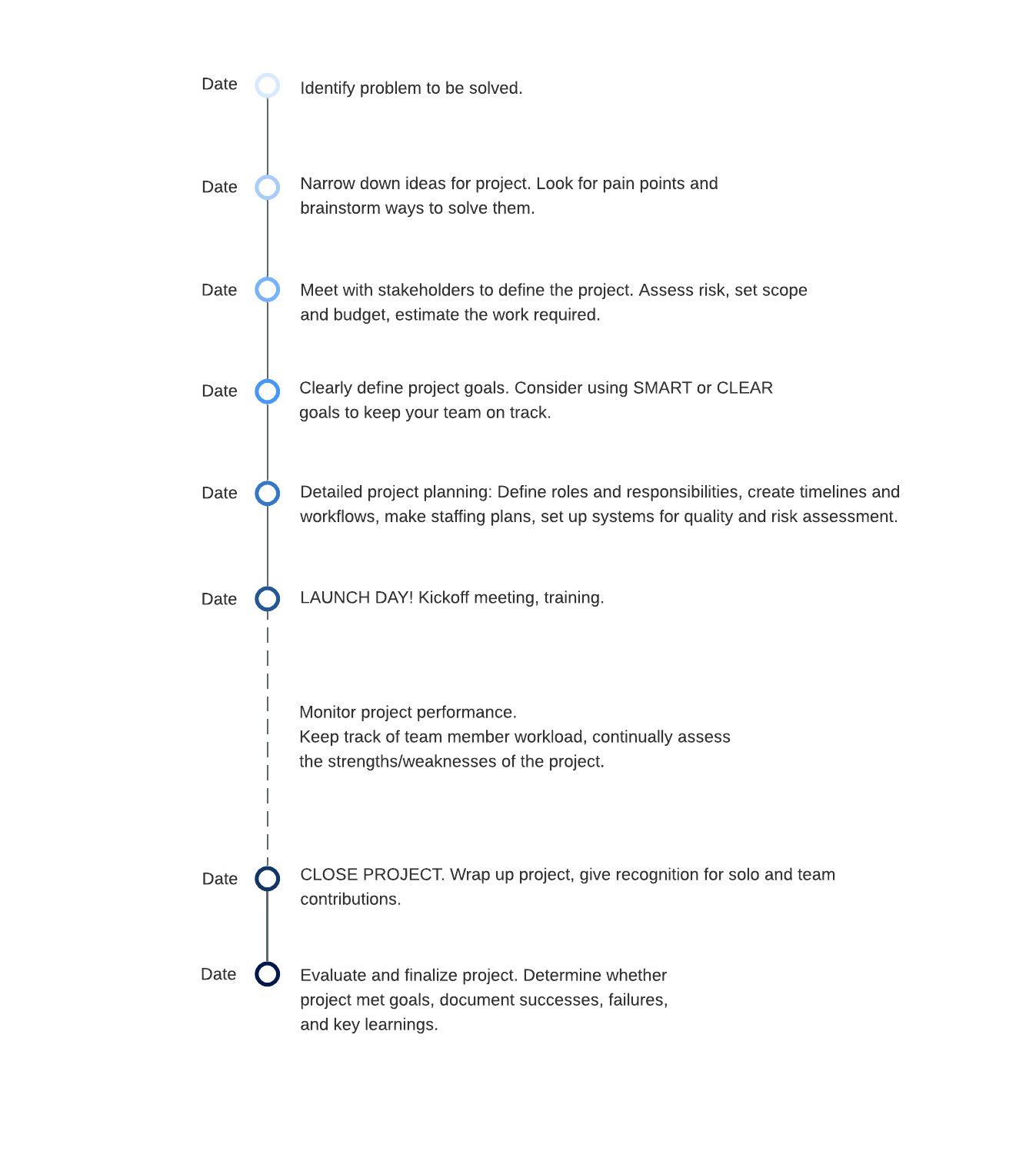
Why you should use project milestones
Project milestones keep a project on track and your entire team on course. Simply put, project plan milestones help you oversee the progress of a project. Additionally, project milestones can help:
- Determine deadlines for different deliverables or parts of the project
- Identify potential bottlenecks
- Motivate team members throughout the project by recognizing their achievements
Think of it this way: If you were building a house, you would set a completion date for your house, but that wouldn’t be the only thing on your calendar. In fact, without setting milestones like pouring the foundation, completing the framing, and installing the roof, you wouldn’t be able to determine when the house could be completed. Milestones help you determine how on track your project is and also determine reasonable completion dates.
The importance of milestones in project management can’t be understated: From keeping momentum moving on a project to determining the health of a project, milestones are key to delivering projects on time.
When to use project milestones
If you’re a project manager, you should be using project milestones in every project. Even smaller tasks are part of larger projects that should have milestones. You don’t, however, need milestones for your daily tasks
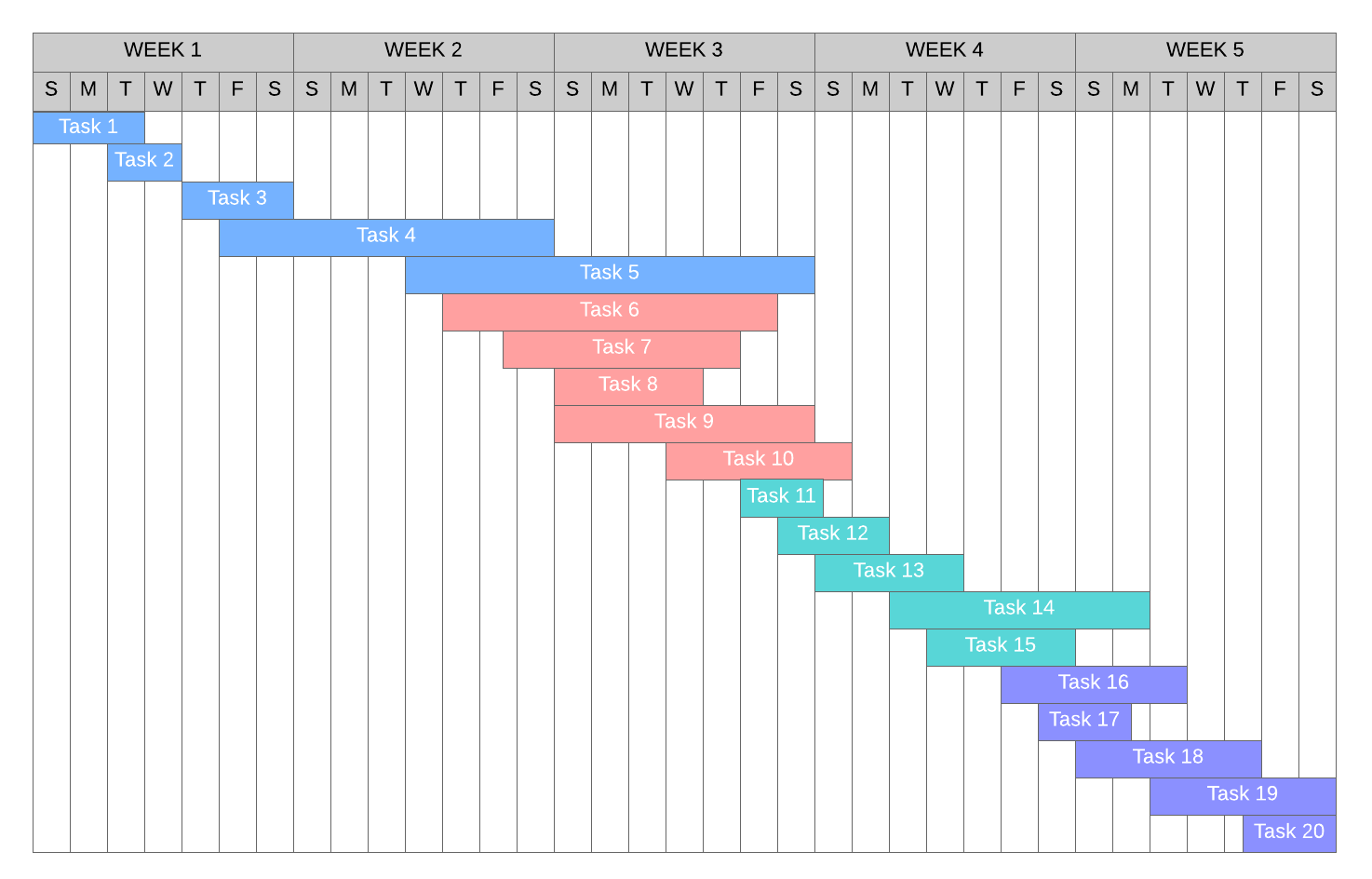
When you’re looking at your project from a high-level view, as in a Gantt chart or a process flowchart, it should be easy to determine milestones based on their importance to the project as a whole. If your project has a deadline one week from now, you may have daily milestones. On the other hand, if your project completion date is a year out, monthly project milestones might be more appropriate.
If you’re identifying milestones that are actually vital to the project’s progress, you won’t be overusing them.
How to determine project milestones
Projects are often complicated and have many moving parts, so it may be difficult initially to determine which steps are really milestones. Ask yourself the following questions to determine whether a particular task or moment should be considered a milestone:
- Is the completion of this task important to the overall project?
- Would the project be derailed if this particular task, decision, or event weren’t completed by the due date?
- Can you use this task, decision, or event as an indicator of the project’s overall success?
- Should it be reviewed by stakeholders?
If the answer to any of these questions is yes, then it’s probably a milestone.
Milestones should feel weighty and important. If, for instance, you’re working on a lengthy e-book for a client, a key milestone would be finalizing copy, but not a weekly summary email. As you set your milestones, keep in mind these project milestones best practices:
- Don’t overdo milestones. Overusing project milestones can actually diminish their importance. Stick to key dates, deadlines, and achievements.
- Keep everyone accountable. If your team misses a milestone, figure out what went wrong.
- Remember risk is good. Milestones are inherent learning opportunities, so there should be some amount of risk involved. If they’re too easy to meet, your team can’t improve.
- Scope out your milestones. Every milestone should be comprised of smaller, easier-to-meet tasks. When your team members look at a milestone, they should know exactly what tasks will need to be completed first to meet the milestone.
- Keep it progressive. Each milestone should be linear and dependent on earlier tasks, not later ones. Once a milestone is completed, your team should be able to start moving towards the next milestone.
How to document project milestones
If you or your team can’t easily identify milestones in a project, there’s no way to convey the significance of important deadlines or deliverables. Remember to mark milestones prominently on your calendar, schedule, or other project documentation.
Lucidchart is ideal for visually representing milestones. With our cloud-based diagramming platform, you can easily make Gantt charts, project management timelines, or project network diagrams. Once your project is laid out on a timeline, use labeled arrows or diamonds to indicate milestones. With a glance, everyone involved in the project can tell exactly what needs to be completed by when.