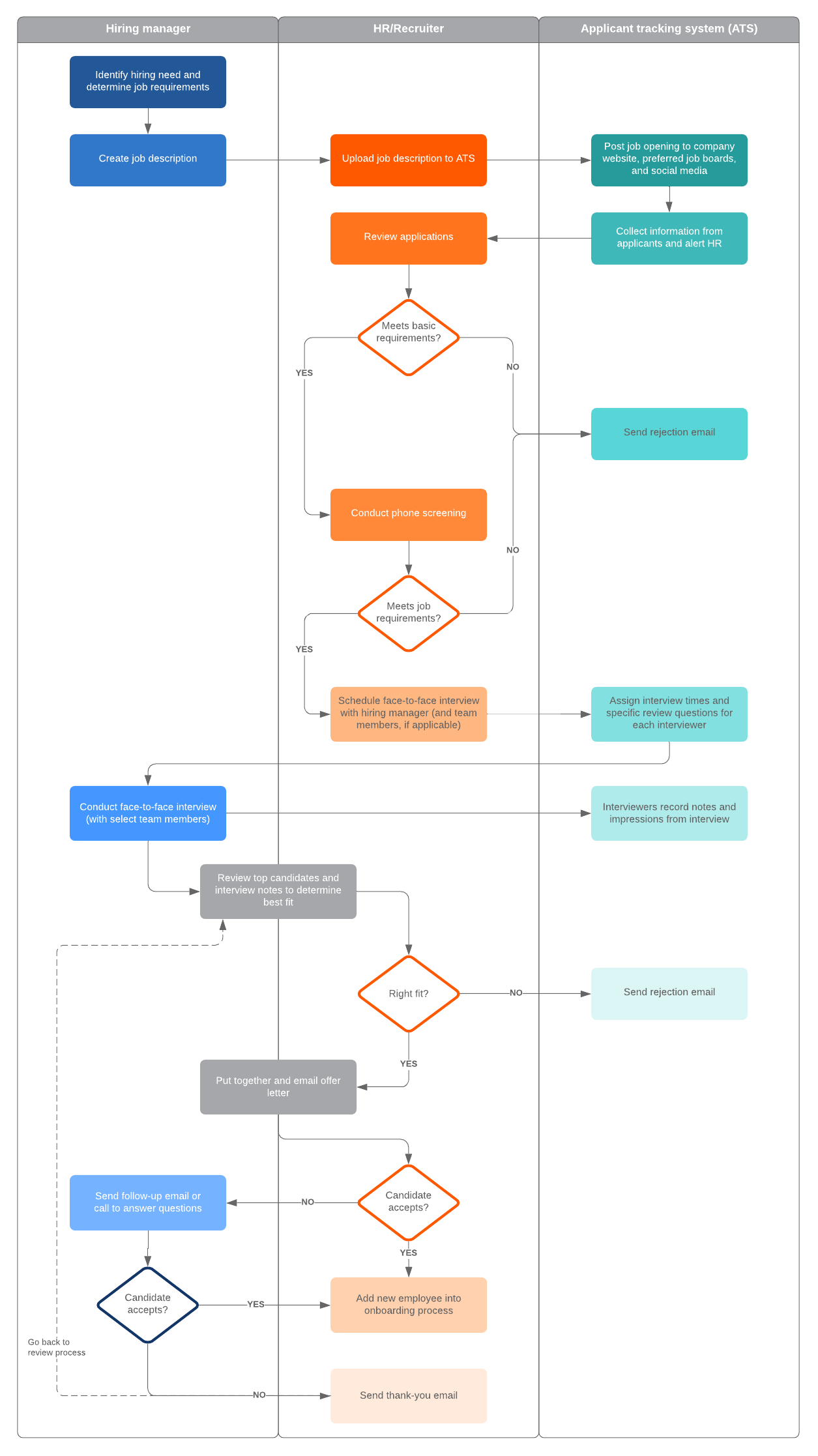
What is the recruitment process?
A recruitment process is an organization-specific plan for finding new candidates and hiring top talent. The Human Resources (HR) department generally executes the recruitment process, with assistance from hiring managers. Sounds easy? Not so fast. A recent study by Training Magazine found that annually, companies spend over $92 billion on training, and employees dedicate an average of 64 hours to it per new hire.
Of course, each company operates differently—what works well for one company might not be the best choice for yours. But the recruitment process steps below will give you some ideas on how to find and evaluate job candidates. We encourage you to adapt these based on your company culture and needs.
Recruitment process steps
Consider using a recruitment process flowchart to highlight the critical recruitment steps and communicate important information.
1. Identify the hiring need
You can’t get what you want unless you know what you’re looking for. At the end of this process, you’re hoping to find the ideal employee, so you have to start by determining what “ideal” means for this position. This step is important, as it will impact every other part of the recruitment process. Survey employees close to the position and consider questions such as:
- How does this role fit into its department?
- What gaps or missing skills does this employee need to fill?
- Which skills and qualities are essential for this position and which are simply nice to have?
As you answer these questions, you may want to look at an org chart of your company. With a single glance, an org chart can give you an idea of what skills are already reflected in the team and where this new employee would fit within the hierarchy.
If you need to fill an existing position, don’t just recycle the job description used when you hired the last employee. Understand the role as it currently stands, since the responsibilities and skills involved have likely changed.
2. Prepare a job description
A job description is often a potential candidate’s first impression of your company, so make it a good one. It should accurately reflect what you need from this employee—required skills and responsibilities of the position—but it should also show candidates what they can expect to receive in return. Aside from compensation, what can this employee gain? What will life at your company be like? What goals will they help to accomplish?
Write the description to match the company culture. Your job description should include some, if not all, of the following:
- Job title and department
- Location
- Hours (full-time, part-time, shift schedule)
- Summary of the position, including objectives, responsibilities, and its relation to the rest of the company
- Minimum requirements
- Preferred experience and qualifications
- Description of your company and its mission
- Salary and benefits
Despite all the information you need to include, try to keep the job description as concise as you can. Remove qualities that won’t factor greatly into your decision.