Log in

Get started with STP marketing

Reading time: about 4 min

Topics:

  • Marketing

Key takeaways

  • STP marketing is a successful model that focuses on strategically personalizing messaging to engage with different audiences.

  • STP is summarized by a formula: Segmentation + targeting = positioning.

  • Lucid can help with each stage of the STP model, offering templates to better understand your buyers, hone your messaging, and more.

If the first rule of marketing is to know your customers, the second rule may be to position your product to better meet their needs. There are countless products out there, and yours can’t be everything to all people. But once you find your target market and decipher the best way to reach them, you’ll increase your chances of finding success exponentially. This is exactly what STP marketing is all about.

What is STP in marketing?

STP marketing is one of the most common marketing models—in fact, you may do it without even realizing it has a name. STP stands for segmentation, targeting, and positioning, and the strategy focuses on personalizing messaging to engage with different audiences. An easy way to think of this model is with this formula:

segmentation + targeting = positioning

Let’s dive into each part of the equation.

Segmentation

Segmentation is all about determining who your audience is. Sure, you can try to broadly target buyers generically, but chances are, your message will resonate less, and you’ll miss out on many who would otherwise be interested in your product.

Conversely, if you segment your audience into smaller groups, you can focus your messaging so it’s more relevant to them. There are countless ways you can segment your audience, but some to consider include:

  • Psychographic, like hobbies or interests

  • Demographics, like gender, marital status, or profession

  • Behavioral patterns, like browsing habits or brand loyalty

  • Geographic, like specific regions, countries, or even climates

Targeting

After you’ve segmented your market, the next step is targeting. In this stage, you’ll narrow down these segments to determine which are most valuable to pursue. There are many metrics you can use to determine this: 

  • Size: You may want to start with the largest segment, since the customer potential is the largest.

  • Reachability: The segment you decide to market to should be easy to access.

  • Profitability: Consider which customers would be cheaper to acquire with significant ROI. Who has the most spending power?

Positioning

Once you’ve determined who to target first, it’s time to apply the insights you’ve acquired from the first two steps and figure out how to market your product to your selected audience.

It’s not just about describing your product; it’s about positioning it from the perspective of the buyers in your segment. What value proposition will resonate with them? What channel can you reach them on? For example, if your product is for teenagers, you’d likely yield much stronger sales from trying to reach customers through social media instead of direct mail campaigns.

Why use the STP model?

There is a reason the STP marketing model has proven so successful. It’s associated with many benefits, such as:

  1. Increased engagement: As you tailor your marketing to appeal to specific segments, your messaging will resonate more with those individuals, leading to higher engagement and conversion rates.

  2. Better ROI on marketing costs: Since you’re approaching marketing more strategically, you can expect a higher return on investment. You’ll save money on wasted budget from trying to reach segments that aren’t likely to yield results. 

  3. Stronger product: Because you are spending time getting to really know your buyers and experiencing more engagement, you can make improvements to your product based on what you learn about them and the feedback you receive.

How to create your own STP model in Lucid

With dozens of ready-to-use templates, dynamic capabilities that enable team collaboration, and integrations with many apps you already use and love, Lucid makes every stage of the STP marketing process seamless. 

Segmentation

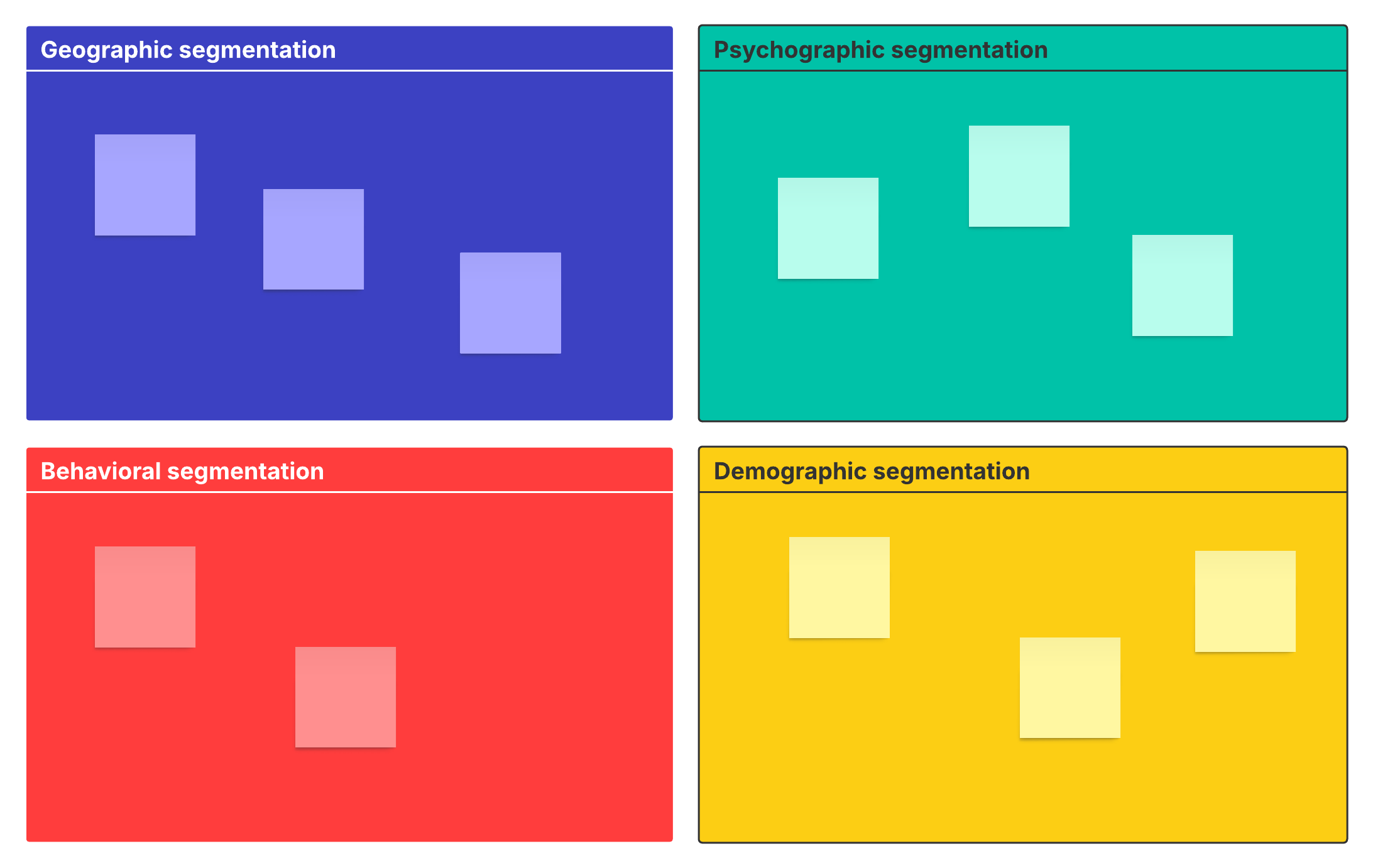
Our market segmentation matrix template can help you stay organized as you identify your ideal market. Lucid’s many sharing options make it easy to collaborate with your team and collect the best ideas about ways to segment your audience.

This market segmentation matrix template helps you organize your segmentation into four subsets. Click on the image to modify it online.

Targeting

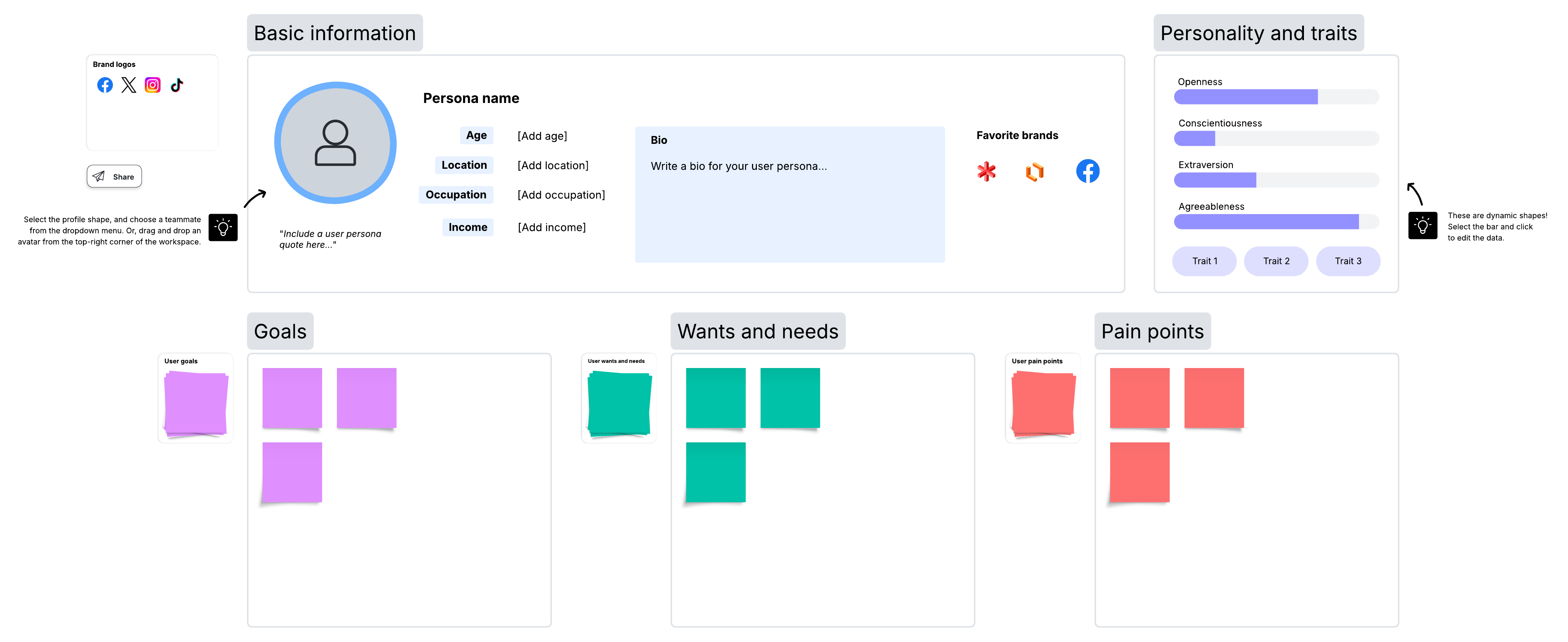
Buyer personas are helpful during this step to better understand the different segments and more easily determine who to prioritize first. Chart pain points, desires, goals, and personality traits with this persona template. Plus, utilize dynamic shapes to visualize specific data.

Better understand your customers with this user persona template. Click on the image to modify it online.

Positioning

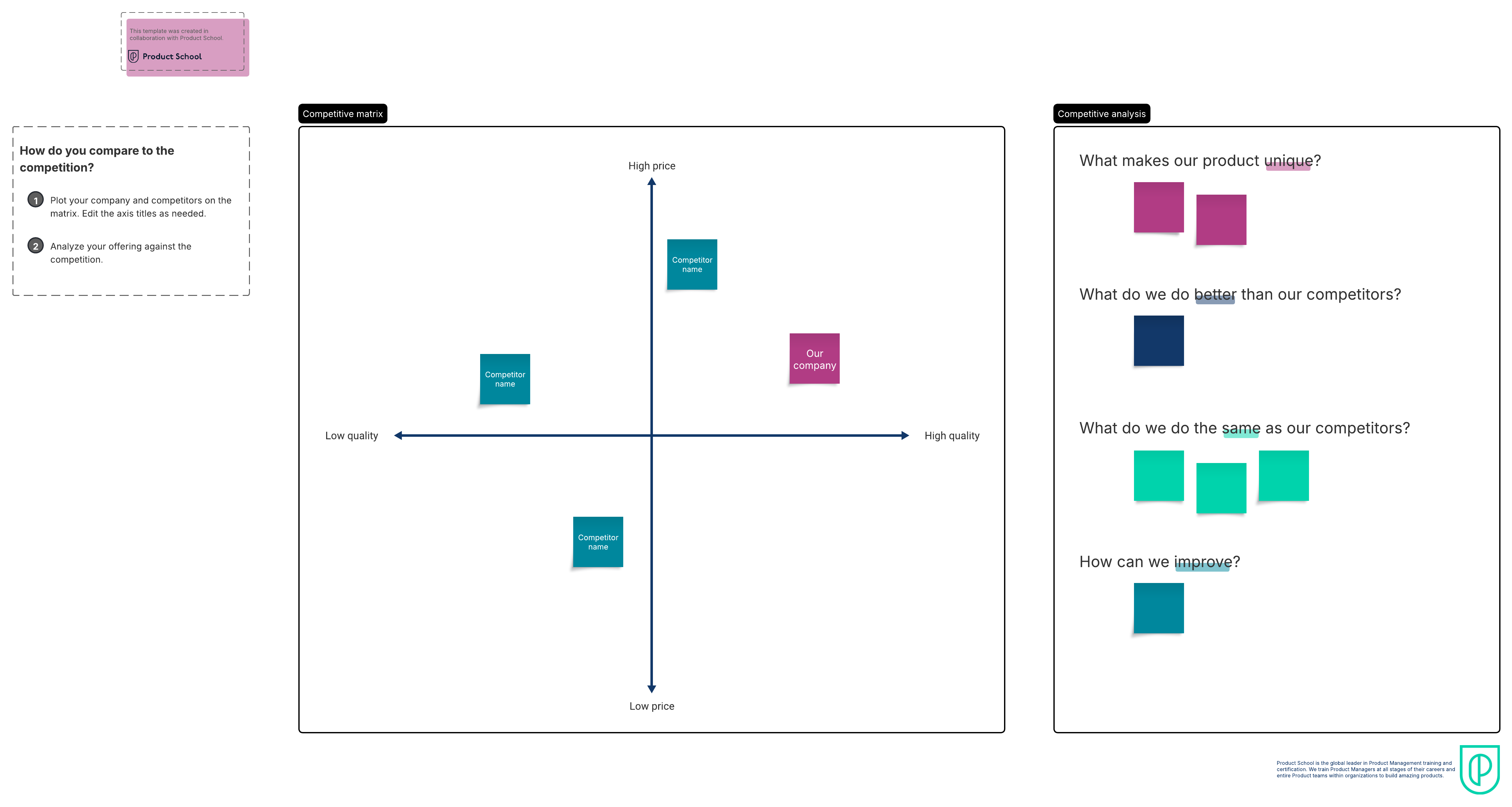
Performing competitor analysis is a key step toward understanding how to best position your product. You’ll need to consider how others are attracting your audience segments and what you can do to reach them more effectively. Our competitor analysis template helps you compare your business with competitors by plotting them on an axis.

Analyze where your business stands compared to the competition with this competitor analysis template. Click on the image to modify it online.

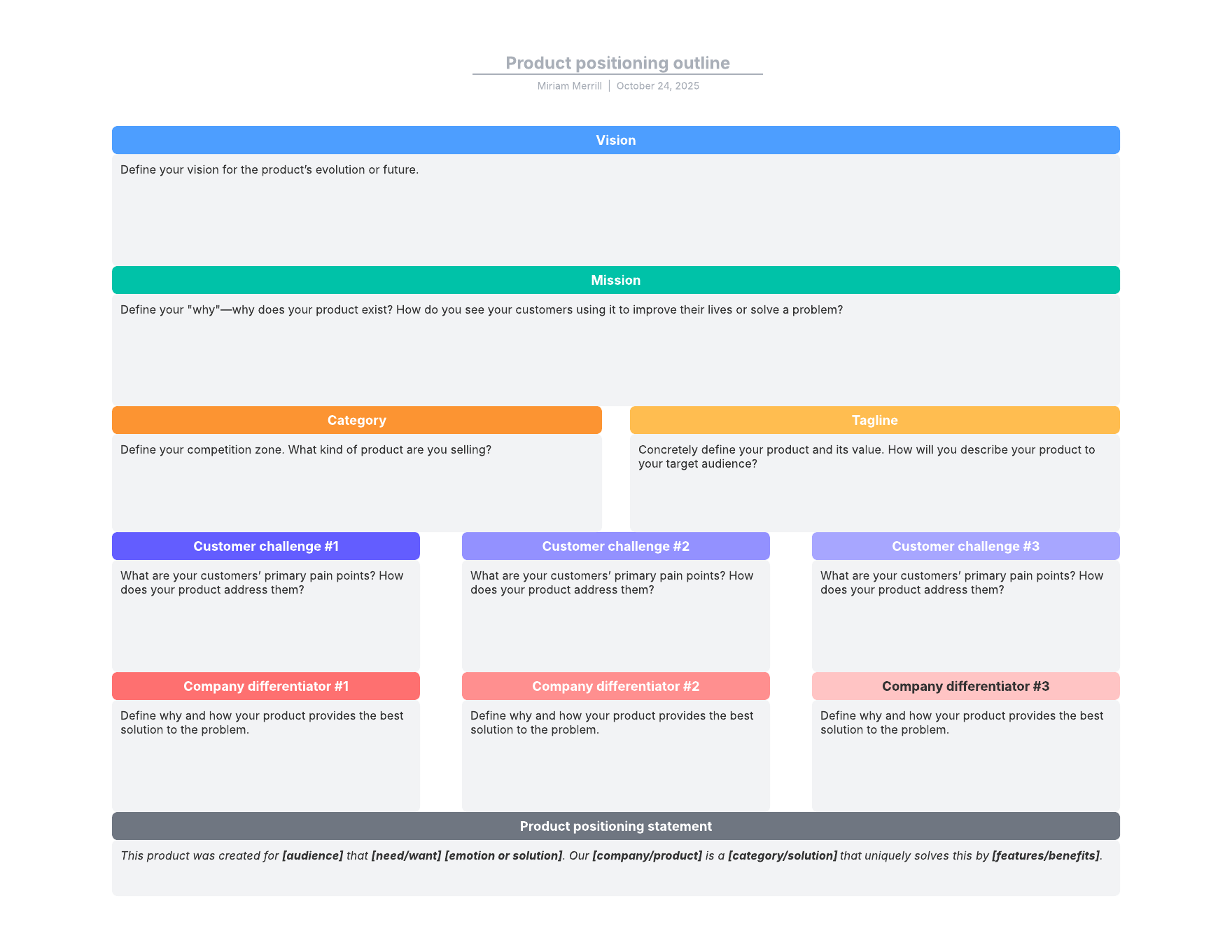
A product positioning map is also helpful. It allows you to examine the value your product offers, how it fulfills buyers' needs, how you compare to the competition, and what you need to change to stand out.

Explore what makes your product unique and valuable with this product positioning outline template. Click on the image to modify it online.

Lucid supports marketing teams through every step of their campaigns.

Learn how

About Lucidchart

Lucidchart, a cloud-based intelligent diagramming application, is a core component of Lucid Software's Visual Collaboration Suite. This intuitive, cloud-based solution empowers teams to collaborate in real-time to build flowcharts, mockups, UML diagrams, customer journey maps, and more. Lucidchart propels teams forward to build the future faster. Lucid is proud to serve top businesses around the world, including customers such as Google, GE, and NBC Universal, and 99% of the Fortune 500. Lucid partners with industry leaders, including Google, Atlassian, and Microsoft. Since its founding, Lucid has received numerous awards for its products, business, and workplace culture. For more information, visit lucidchart.com.

Related articles

  • 9 templates for marketers

    Whether you specialize in a specific marketing role or you wear many different hats on a small team, we’ve rounded up nine marketing templates to make your job easier.

  • How to develop buyer personas

    To attract and satisfy your target customers, you need to know who your customers are and what they need. Developing buyer personas is the first step to understanding your audience so you can make more sales and close more deals.

  • Marketing mix 101: How to use the 4 Ps of marketing

    A marketing mix could be your golden ticket to developing a product that rises above your competition and brings value right to the customer.

  • Make informed decisions with the marketing research process

    Find all the answers you need to achieve marketing success. Read our article to learn the 5 steps of the marketing research process. 

Bring your bright ideas to life.

Sign up free
Sign in with GoogleGoogleSign in with MicrosoftMicrosoftSign in with SlackSlack

By registering, you agree to our Terms of Service and you acknowledge that you have read and understand our Privacy Policy.

Get started

  • Pricing
  • Individual
  • Team
  • Enterprise
  • Contact sales
PrivacyLegalCookie privacy choicesCookie policy

© 2026 Lucid Software Inc.